

Be first to read the latest tech news, Industry Leader's Insights, and CIO interviews of medium and large enterprises exclusively from Retail Tech Insights
A featured contribution from Leadership Perspectives: a curated forum reserved for leaders nominated by our subscribers and vetted by the Retail Tech Insights Advisory Board.

PNJ Group
Experiential Marketing: Merging Marketing and Experience in the New Era

Tran Nguyen Phi Long
The COVID-19 pandemic has revolutionized consumer behavior in urban and rural areas alike. Consumers now expect brands to provide better-enhanced, consistent, and “tailor-made” experiences, rather than just relying on brand messaging.
As a result, businesses have adopted experiential marketing as a new weapon to bring their brand essence to life, foster comprehensive brand awareness, and create interactive shopping environments. This novel marketing approach opens up opportunities previously limited to marketers, especially during the predicted economic volatility of 2023. By employing experiential marketing, businesses can enhance their competitiveness, differentiate themselves from competitors, and build closer relationships with customers, even in challenging times.
Defining Experiential Marketing
Experiential marketing is an approach designed to attract consumers and promote direct engagement with a brand or its products. Instead of simply conveying a message through traditional advertising, experiential marketing allows consumers to experience something tangible and immersive. While traditional marketing channels may target a few senses like sight or hearing, experiential marketing has the power to engage all five senses simultaneously, fostering bilateral interaction.
This level of interaction signifies the true nature and significance of experiential marketing. The more engaging a marketing activity is, the more memorable it becomes for consumers. Interaction is a key metric for measuring marketing effectiveness, and experiential marketing offers unparalleled direct and sensory interactions. When tailored perfectly to fit individual customers, these interactions hold even greater value for businesses.
Captivating Minds and Inspiring Purchases: Harmonizing Marketing and Experience
In the "new normal," customers seek the harmonious blend of marketing and experience while, oftentimes, these two are distinct divisions within the internal workings of an organization. While brand communication creates awareness and influences the mind, it is the experience that connects with the heart, leaving a lasting brand impression and motivating customers to allocate their resources towards a company's products. Many businesses solely focus on capturing customers' 'minds,' yet overlook everything else thereafter.
Thus, brands that create awe-inspiring experiences beyond expectations are more likely to influence customers' purchasing decisions and foster loyalty.
 Approaching Experiential Marketing in the New Era
In challenging times, businesses must find new and smarter approaches to convince customers to spend their money despite tightened budget.
1. Optimize, don't "simplify"
Amid challenging times, marketers shoulder the responsibility of optimizing customers' budgets while unleashing innovative ideas. Reducing marketing budgets does not equate to simplicity or disconnecting from customers. Instead, customers gravitate toward brands that maintain a strong bond, even in turbulent periods. Thus, marketing budgets must be optimized to prioritize impactful and inventive activities or explore new approaches.
Marketers must demonstrate mindfulness and sharpness in resource allocation and campaign budgeting. They should consistently evaluate if marketing activities and deployment methods contribute to the brand's goals and commercial necessities. This critical question should always guide marketers in prioritizing effectiveness and optimization.
2. Shifting the Focus to Indelible Impressions
During periods of economic volatility, such as the current situation and the COVID-19 period, there are notable similarities in the limitations of purchasing power. Brands that persistently prioritize exploiting customers' finances to generate demand may encounter negative repercussions and diminished effectiveness. Instead, it is essential to recognize this as an opportune moment to establish emotional connections, evoke empathy, and curate unforgettable and tailored experiences for customers.
It is crucial to understand that Experiential Marketing goes beyond traditional approaches, providing authentic value through education, heightened awareness, and the establishment of long-term relationships. By integrating Experiential Marketing with conventional methods, brands can enhance their overall marketing strategies and create a more comprehensive impact. Through subtle messaging, brands can emphasize the importance of forging lasting connections and leaving a positive impression on customers, thus tapping into the emotional aspect of consumer decision-making and cultivate customer loyalty.
3. Emphasizing Customization and Minimizing Uniformity
While maintaining continuity, consistency, and coherence in marketing activities is vital, it is equally important to acknowledge that a uniform approach does not fit every marketing challenge. This principle underscores the need for a comprehensive understanding of customer demands, market trends, and competitors' characteristics, therefore creatively tailoring solutions that align with specific regions, product lines, and brands.
Accelerating Innovation in Experiential Marketing
Investments in marketing and customer experience play distinct roles for businesses in today's market. However, successful coordination of these aspects requires insights that leverage the power of both marketing and experience effectively.
Integrating marketing and customer experiences: Transitioning from "mass" to "customization"
In the past, businesses primarily focused on "mass" marketing campaigns, gathering customer insights to align communication messages with the majority of their audience.
However, in times of economic downturns, where consumers are more cautious with their spending, employing a "customization" strategy becomes increasingly effective. This approach utilizes modern media tools to monitor customers and personalize communication messages.
By adopting a “precision targeting” approach (customization), we maximize our marketing impact by honing in on the precise audience, achieving optimal results while managing costs efficiently.
Take, for instance, PNJ's highly successful "Win the non-jewelry shoppers" campaign. By reallocating their investment budget, they expanded experiential marketing activities from six major events in specific regions to over 50 diverse locations across the country. This expansion opened up wider avenues for customer engagement, fostering deeper connections. By continuously testing different experiential marketing approaches to uncover the winning formula among the 6Ps of Marketing, PNJ's campaign was honored with the esteemed Best Retail Marketing award at The Marketing Events Awards 2022 for the Southeast Asia, South Asia, and ANZ region.
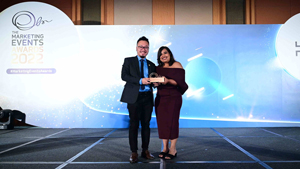 Mr. Tran Nguyen Phi Long - Head of Retail Marketing, represented PNJ Group to receive the Best Retail Marketing award at The Marketing Events Awards 2022.
Through the integration of marketing and customer experiences, we are paving the way for a transformative journey from mass communication to personalized engagement, unlocking new opportunities for success in today's dynamic marketplace.
Relentless Creativity in Experiential Marketing
In today's diverse marketplace, customers' expectations are constantly evolving, driven by their insatiable curiosity for novel experiences. To capture their attention, businesses must break away from familiar tactics and offer something truly captivating. Additionally, Experiential Marketing introduces the concept of "artificial scarcity," leveraging the Fear of Missing Out (FOMO) to drive customer behavior.
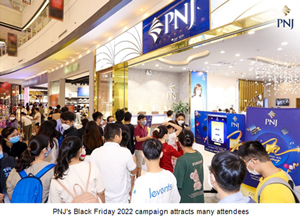 During PNJ's successful Black Friday 2022 campaign, we combined Entertainment with Shopping to create an engaging marketing experience. By utilizing an innovative AR Game, specifically tailored to the jewelry industry and PNJ's target audience, we delivered an unparalleled and memorable event.
Another noteworthy achievement was seen in PNJ's "God of Wealth's Fortune Shaking" campaign, seamlessly integrating Experiential Marketing from digital platforms to physical stores. This groundbreaking initiative aimed to make a lasting impact and foster a prosperous start to the new year. The campaign attracted an impressive participation of 1,000,000 individuals and raised over 5 billion VND for charitable and social welfare activities.
By embracing these cutting-edge strategies, PNJ continues to lead the industry, captivating customers with immersive experiences that yield exceptional results.
Conclusion
Experiential marketing offers a significant advantage by creating positive associations in consumers' minds. As we transition from economic turbulence into a new era, these accumulated positive associations strengthen the alignment of customers' thoughts, emotions, and purchasing decisions, ultimately maximizing their lifetime value. Moreover, the captivating and memorable experiences delivered through marketing activities prompt customers to share their encounters, organically amplifying brand awareness.
